
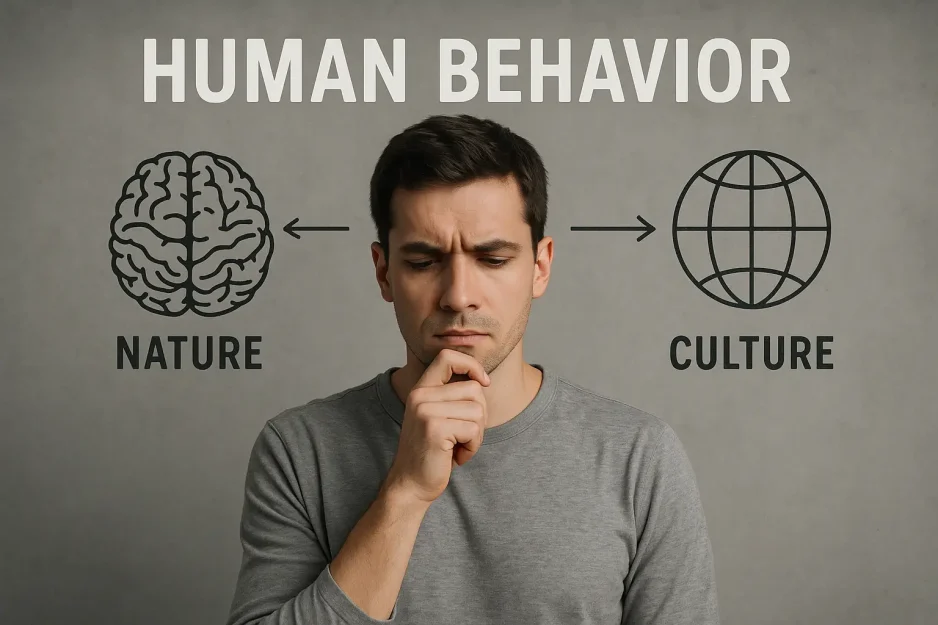
Human behavior is everything an individual does. It is through doing that humans establish a relationship with their environment and thus reveal what they desire and fear from it, what they can and cannot control, and what means they have to embrace or avoid.
Any type of human relationship with the environment (other people, things, etc.) therefore occurs through doing (or, rather, through saying, which should be understood as a particular way of acting). Doing, therefore, is also the tool humans use to communicate with others, intentionally or unintentionally.
The two fundamental variables of human behavior are: nature and culture. Human nature is determined by all those genetic characteristics, somatic traits, and structural aspects of our faculties, such as intelligence, memory, learning ability, etc., which constitute the so-called behavioral hardware.
Culture is made up of all the environmental and cultural information an individual receives from childhood until full psychological maturation. Important elements of cultural aspects include parenting style, education, language and sports skills, and the social and family context in which one grows up, all of which inevitably influence behavior. These aspects could be considered the software of human behavior.
Natural factors can be modified based on further learning or unlearning, while natural factors, or genetic factors, are unchangeable. However, some leading psychologists believe that even genetic factors, under constant operational influence, can undergo modifications.